The Survivorship Gap: What Happens When Treatment Ends and the System Stops Showing Up
Jul 19, 2026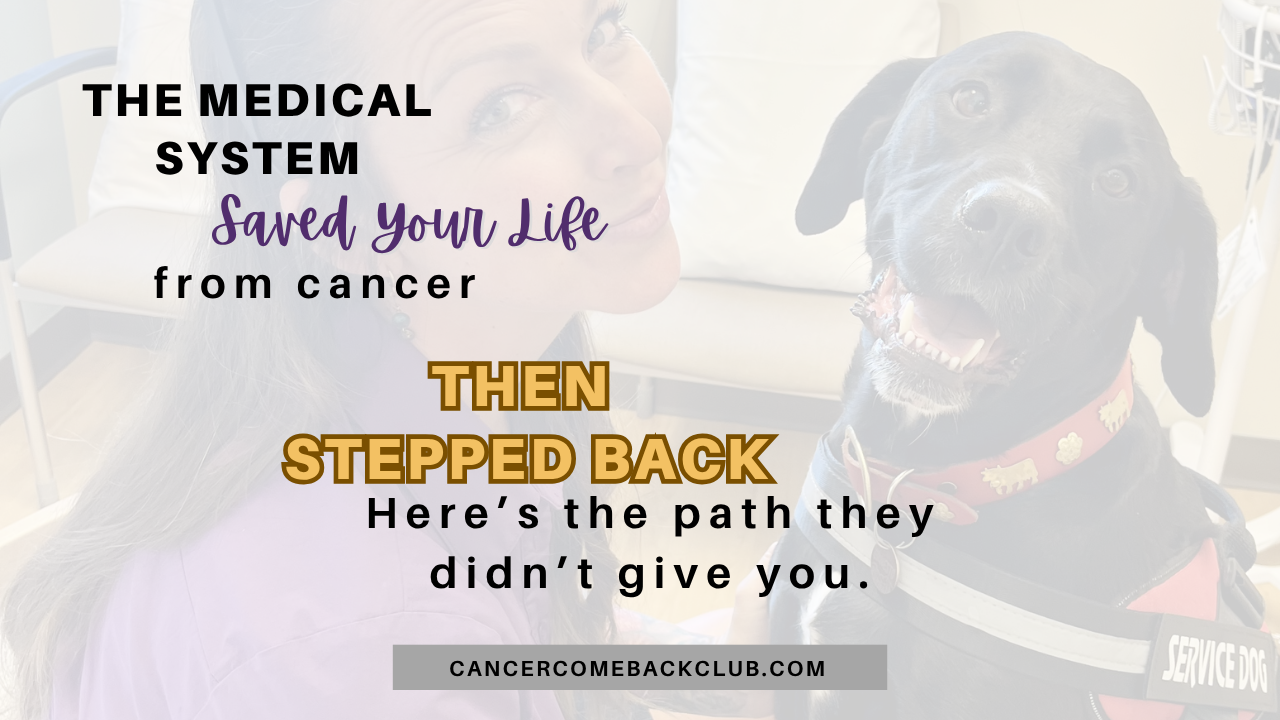
The Survivorship Gap: What Happens When Treatment Ends and the System Stops Showing Up
A real-human look at the most under-supported chapter of cancer, why it exists, and what hospitals, corporations, and survivors can actually do about it.
There is a moment, somewhere in the cancer journey, that almost nobody warns you about.
It's the moment your last treatment ends, the IV's come out, the surgical sites are now yours to care for, and the radiation and/or chemo machine goes quiet. . Somebody on your care team smiles, says some version of "congratulations, you're done," and hands you a follow-up scan calendar and a little paper packet with a phone number on it.
And that, friend, is approximately the entire off-boarding from one of the most physically and emotionally devastating experiences a human being can survive.
I remember walking out of that appointment thinking I should feel something celebratory, a montage moment, some confetti, a swelling soundtrack. Instead I felt very, very small. Like somebody had handed me back the keys to a car that had been totaled, and patted me on the head, and told me to drive home in it.
That feeling, that quiet "wait, that's it?" moment, is the entry point to the most under-supported chapter of cancer. Researchers, oncologists, and survivor advocates have a name for it. They call it the survivorship gap. And if you are sitting in it right now, post-treatment, wondering why life after cancer feels so much harder than anyone prepared you for, this article is for you. It is also for the hospitals, oncology teams, corporations, and cancer organizations who are quietly watching survivors fall through this exact gap and looking for a way to actually help.
Let me show you what we are dealing with.
What is the Survivorship Gap?
The survivorship gap is the long, quiet stretch between the day your active treatment ends and the day you actually feel like a functioning human being again in your post-cancer body and life.
In the medical literature, it refers specifically to the lack of structured care, rehabilitation, mental health support, nutritional guidance, and re-entry programming offered to people once their cancer treatment is complete. In real life, it refers to the slow, disorienting realization that the army of people who saved your life is not the army of people who will help you live in the body and life that come after.
The diagnosis chapter has a script. The treatment chapter has a script. The survivorship chapter has, in most cases, a follow-up scan and a vague suggestion to "take it easy and listen to your body."
This is not a small problem. The American Cancer Society estimates there are over 18 million cancer survivors in the United States alone, with that number projected to climb past 22 million within the next decade. That is a population the size of a small country, mostly walking around without a real survivorship plan. We are talking about millions of people who are technically cured by every metric the medical system uses, but who are still in pain, still exhausted, still struggling with the cognitive fallout, still trying to sleep through the night, still wondering whether they will ever feel like themselves again.
The survivorship gap is not a feeling, it is a structural failure and it is one of the most documented and least addressed problems in modern oncology.
What the Gap Actually Looks Like Day to Day
Here is where I am going to be very honest with you, because the data only does so much, and the part of this story that breaks my heart is the part that lives in the small daily moments.
When my own treatment ended, after four major abdominal surgeries lasting more than five hours each, I was sent home with no physical therapy referral. No pelvic floor evaluation, no survivorship care plan, no mental health follow-up, no nutritional support, no return-to-work guidance, no rehab program, no structured roadmap of any kind. The medical system had done an extraordinary job of keeping me alive. It was simply not built to help me live afterward.
For the next two years, I quietly tried to figure it all out on my own. I lost the ability to do my job for stretches at a time. I sat on the bathroom floor crying because something as basic as standing up from a chair felt impossible. I lost friendships because I could not show up the way the old version of me used to. I went to specialists who did not know how to help me. I read research papers in bed at midnight. I built rehab plans for myself out of training certifications I had earned long before cancer was ever in the picture.
When I finally found a pelvic floor physical therapist years later, she looked at me with the kind of disbelief that still haunts me. "How are you even functioning day to day? Why didn't anyone refer you sooner?"
If you are a survivor, you probably already know this in your bones. If you are a clinician, an HR leader, or a hospital administrator, this is the part I want you to sit with. The survivorship gap is not happening to a small subset of difficult cases. It is happening, by default, to almost every cancer survivor walking out of treatment in this country.
Why the Gap Exists in the First Place
The survivorship gap is not the result of bad doctors or careless oncology teams. The clinicians I worked with were brilliant, kind, and genuinely worked miracles inside the systems available to them. The problem is upstream of any individual provider.
Cancer care in the United States is structured around the acute phase of the disease. Diagnose it, stage it, treat it, surveil it. Insurance reimbursement, hospital billing codes, medical school training, and oncology workflows are all built around fighting and monitoring the disease itself. Once the disease is controlled, the existing system has very few mechanisms to fund, schedule, or deliver structured rehabilitation, mental health care, return-to-work counseling, or nutritional support for cancer survivors.
In other words, our medical system is exquisitely designed to save your life and almost completely undesigned to help you rebuild it.
After a knee surgery, you walk out with a physical therapy prescription, a clear rehabilitation timeline, and a series of follow-up appointments. After a heart event, you are routinely enrolled in cardiac rehabilitation. After major orthopedic surgery, you are handed off to a rehab team like a relay race baton. After cancer, which is arguably the most full-body trauma a person can survive, you are sent home with a calendar of scans and a wish for the best.
This is not something individual survivors should be expected to fix on their own. It is also not something individual hospitals should be expected to fix on their own. It is a systems-level issue with a systems-level solution, and that is exactly the gap structured survivorship programming is designed to fill.
The Five Domains the Survivorship Gap Tends to Show Up In
In my own recovery, and in the work I now do with cancer survivors and survivorship organizations, I see the survivorship gap show up in five specific domains. Naming them helps, because once you can see them, you can start to address them.
Physical rehabilitation
Cancer survivors lose strength, mobility, balance, and stamina during treatment, and most are not given a structured rehab plan to rebuild any of it. Surgeries leave scar tissue and alter movement patterns for life. Chemotherapy can leave neuropathy, deconditioning, and cognitive fatigue. Radiation can leave tissue changes that affect range of motion for years. As an NASM Certified Corrective Exercise Personal Trainer who specializes in post-treatment populations, the most common thing I see in a brand-new survivor client is a body that is quietly compensating in dozens of small ways and a person who has been told to "just take it easy" for so long that their nervous system has forgotten how to recruit certain muscles at all.
Mental health and identity
Cancer is a trauma. Full stop. The treatment is traumatic, the diagnosis is traumatic, and the chapter that follows is its own special flavor of psychological re-entry. Anxiety, scanxiety, depression, post-traumatic stress, identity collapse, and grief over the version of yourself who existed before diagnosis are all common, normal, and almost completely unaddressed by standard post-treatment care. Most survivors are never offered mental health screening, let alone treatment.
Nutrition
Survivors are bombarded with nutritional misinformation the moment they finish treatment. Detox teas, cleanses, anti-cancer diets, influencer protocols sold by people who have never read a peer-reviewed study in their lives etc. Almost none of them get a referral to an actual registered dietitian or a credentialed nutrition program. As a Plant-Based Nutritionist trained through eCornell's program based on the T. Colin Campbell research, I can tell you with full confidence that the most healing nutritional interventions for survivors are gentle, repeatable, and evidence-based. They are also almost never the ones being sold to you on Instagram.
Return-to-work and financial recovery
A staggering number of survivors return to work physically and cognitively altered, often with lingering fatigue, brain fog, neuropathy, or pain, and almost none of them are given any structured support for that transition. Many are afraid to ask for accommodation, many burn out within months, and many quietly leave careers they spent decades building, simply because the support system to come back into their working life did not exist.
Relational and emotional support
The casseroles stop, the check-ins stop, and the friends who showed up during treatment go back to their own lives. Survivors are quietly left without the social scaffolding they had during the acute phase, often at the exact moment when the emotional aftershocks are hitting hardest.
When you put all five of these domains together, you are not looking at a gap, you are looking at a canyon.
What This Means for Hospitals, Cancer Centers, and Survivorship Organizations
If you are a hospital, an oncology team, a cancer center, or a survivorship program reading this, I want to speak to you with the same honesty I would offer a survivor across the table from me.
You are not the villain in this story. The clinicians inside your walls are extraordinary. The care your patients receive during treatment often saves their lives. The reason the survivorship gap exists is not a failure of care during treatment, it is the absence of structured programming once active treatment ends.
This is also where the opportunity lives.
Patients who leave your care without a real survivorship plan often quietly cycle back through your system in different ways, through emergency rooms, through pain clinics, through repeat consults for issues that could have been preventatively addressed by a structured rehabilitation, mental health, and lifestyle program. They also quietly tell other patients about how alone they felt after treatment. The hospitals that are leading the future of oncology are the ones who have figured out that survivorship programming is no longer optional. It is the next standard of care.
This is exactly the gap The Cancer Comeback Club was built to help fill. The 21-day program is structured to be licensable to hospitals, cancer centers, and survivorship organizations as a guided re-entry experience for patients leaving active treatment. We offer group cohort licensing, workshops, retreats, and long-term partnerships for organizations that want to deliver real, structured, post-treatment survivorship care without having to build the curriculum from scratch.
If that is something your patients need, and you and I both know that they do, please reach out. This is the work my mission was built around.
What This Means for Companies and HR Leaders
If you are a corporate wellness program, an HR leader, or an executive at a company that employs human beings, I want you to hear this part too.
Your company employs cancer survivors, that is not a hypothetical, that is statistics. Roughly one in two men and one in three women in the United States will be diagnosed with cancer in their lifetime, and a significant portion of those people will return to work after treatment. Many of them are quietly returning right now, into your offices and your video calls and your team meetings, with bodies and brains that are still in the middle of an enormous and largely unsupported recovery.
What they need is not a generic wellness platform. What they need is structured post-treatment survivorship programming, designed specifically for the re-entry phase of life after cancer treatment.
Companies that invest in real survivorship support for their employees see a measurable change in retention, productivity, and employee loyalty. More importantly, they protect human beings who have just survived something most of us only know from a distance. Corporate sponsorship of survivorship programming is one of the most underused and most powerful forms of employee care available to modern organizations.
The Cancer Comeback Club offers corporate sponsorship tiers, group licensing, keynote speaking, and workshop options specifically designed for companies who want to actually show up for their employees who are returning to work after cancer. If you are reading this and a name has just popped into your head, that is the person we are talking about. Reach out, let's build something for them.
What This Means for You, the Survivor Sitting in the Gap
If you are reading this from inside the survivorship gap right now, I want to say one specific thing to you before we close.
The reason this chapter is so hard is not because something is wrong with you. The reason this chapter is so hard is because the structural support that should exist for you does not yet exist at scale, and you have been quietly trying to recover from one of the most physically, emotionally, and identity-altering experiences a human being can survive, in a system that was not built to help you do that.
This is the gap and the gap is being filled, slowly, by survivors and clinicians and programs who refuse to keep pretending it is not there.
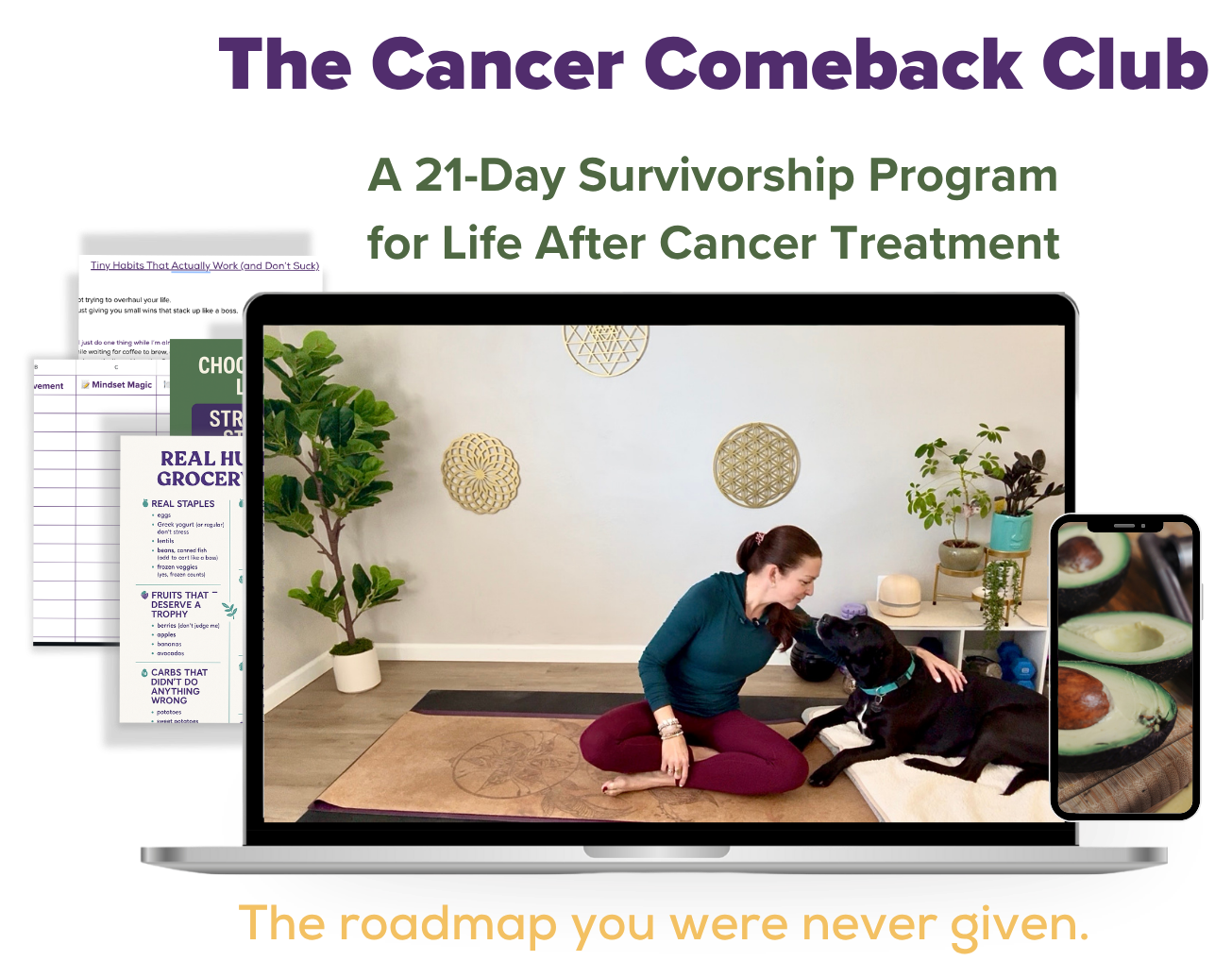
The Cancer Comeback Club is a 21-day survivorship re-entry program built specifically for the gap.
It is structured around the Three Anchors of Survivorship: gentle movement, reflection, and food for healing. It is paced for actual cancer recovery, including the days you are exhausted, in pain, or quietly questioning whether any of this is working. You can do it from your bed if you need to, you can repeat days or skip days, you can take a week off. The program was built by a survivor for survivors, and it is the roadmap I wish someone had handed me the day my treatment ended.
Inside the program you will also find 🐾Ernesto, my 88-pound rescue dog and unofficial healing assistant. He supervises most of the videos, naps through the rest, and represents one of the more important things I learned in my own re-entry phase. The comeback is easier when somebody is sitting beside you.
Closing the Gap, One Survivor at a Time
The survivorship gap will not be closed by a single program, a single hospital, a single company, or a single survivor. It will be closed slowly, over years, by every clinician who refers a patient to real post-treatment care, every hospital that licenses structured survivorship programming, every company that invests in their returning employees, every cancer organization that partners with survivor-led programs, and every survivor who decides that this chapter is something they are actively building, not passively waiting for.
If you are a survivor, come find your comeback with us. The roadmap exists now.
If you are a hospital, oncology team, cancer center, or survivorship organization, let's talk about what real post-treatment survivorship programming looks like inside your patient population.
If you are a corporate leader, let's talk about what survivorship programming looks like for the survivors you already employ.
The gap is real. It is also fillable. And we are quietly, persistently, getting to work.
💜 Sara & Ernesto 🐾
Sara Broome is a colon cancer survivor, NASM Certified Corrective Exercise Specialist, and Weight Loss Specialist, Plant-Based Nutritionist (trained through eCornell's T. Colin Campbell Center), Cancer Wellness Coach, and the founder of The Cancer Comeback Club, a 21-day survivorship re-entry program for life after cancer treatment.She partners with hospitals, cancer centers, foundations, and corporations to deliver structured post-treatment survivorship programming, group licensing, workshops, retreats, and keynote talks on cancer recovery and life after cancer. She lives somewhere quiet with the love of her life, a rescue dog named 🐾Ernesto.
Learn more about the Cancer Comeback Club, a 21 day survivorship re-entry program, by clicking below!
Love The Cancer Comeback Conversations?
💌 Join The Sara & 🐾 Ernesto Drop-In
Real-life updates on movement, food for healing, and survivorship after cancer… shared when energy allows, because healing doesn’t follow a schedule.
👉 Subscribe to The Sara & 🐾 Ernesto Drop-In
We hate SPAM. We will never sell your information, for any reason.