5 Reasons Your Body Feels Different After Cancer (and How to Reconnect)
Jun 26, 2026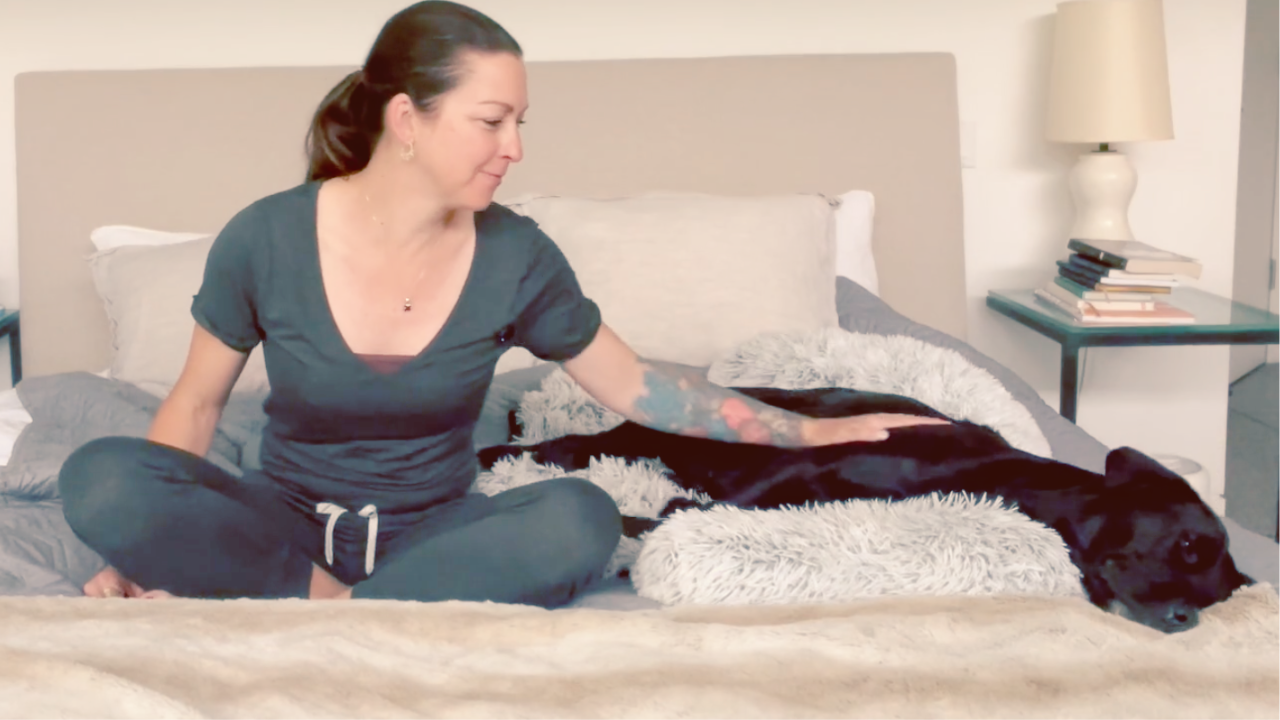
5 Reasons Your Body Feels Different After Cancer (and How to Reconnect)
A real-human guide to the post-cancer body, why it feels so foreign after treatment, and the gentle path back to feeling at home in your own skin again.
There is a very specific moment after cancer treatment when you stand in front of a mirror, or sit on the edge of a bed, or catch your reflection in a car window, and you do not recognize the person looking back at you.
It is not just the obvious things...the scars, the changed weight, the hair that grew back a different texture, the port site that never quite went away. It is something deeper than appearance. It is the unsettling feeling that the body you are inside of is no longer the body you know how to live in.
Getting dressed became one of the hardest parts of my day. Every morning I would stand there in my tiny apartment above a garage with 🐾Ernesto watching me from the bed, and I would look down at my abdomen and just feel sad. The sadness had very little to do with how the scars looked, and everything to do with what they meant. Every line across my body was a reminder of how much trauma my poor little body had been through, and how much work she had done to rebuild herself afterward. I felt grief for my abdomen specifically, because she had been cut through with what I think was twelve incisions, maybe eleven, I honestly stopped being able to keep track somewhere along the way. Underneath all of it was the quiet weight of knowing I was going to look at my own body through a different lens forever, a lens of sadness for what she had endured and a low, persistent frustration that this is just what ended up happening to her. The harder truth I am still slowly working on is that I do not want to greet my scars with sadness and frustration every morning when I get dressed. I want to learn how to heal the way I feel about them, so that one day I can look down and see them as evidence of survival, rather than evidence of everything she had to give up to stay alive.
If you have felt this, even quietly, even just once, please hear me when I tell you this is one of the most common and least talked about parts of life after cancer. It is also one of the most healable, in a slow, patient way that asks for time and consistency rather than a quick fix.
This article is for the cancer survivor who is sitting somewhere in the post-treatment fog, looking down at their own hands and wondering when they started to feel borrowed. Let me walk you through why this happens, what the research actually says, and the gentle path back to feeling at home in your post-cancer body.
What "Body Disconnection" Actually Means After Cancer
The clinical term is body disownership or body disconnection, and it shows up in survivors of every kind of trauma, but particularly in cancer survivors because cancer is one of the few traumas that happens inside the body, often invisibly, and is treated by doing more things to the body.
Think about that for a second.
For months, sometimes years, your body was the location of the threat. It was scanned...it was opened...it was infused...it was burned...it was stitched...it was monitored. The relationship you had with your own body during treatment was, by necessity, a clinical one rather than an intimate one. Your body became a thing that doctors had opinions about, that machines took pictures of, that medications had to enter, that surgeries had to alter.
When treatment ends, that clinical relationship does not just shut off. The body remembers, the nervous system remembers, the skin remembers, the scar tissue remembers, and so a survivor is often left in this strange in-between space where the threat is technically gone, but the body still feels like a place they are visiting rather than living.
This is not in your head, it's in your nervous system, and there is a growing body of research in trauma neuroscience and oncology rehabilitation showing exactly why this happens.
The Five Reasons Your Body Feels Different After Cancer
There are five specific reasons your post-cancer body can feel like a stranger, and naming them helps, because once you can see the mechanism, the path back stops feeling so mysterious.
Your nervous system has been on high alert for a very long time. Cancer puts the body into a sustained survival state where cortisol stays elevated. The sympathetic nervous system, the part of you that handles fight or flight, gets stuck in an on position for the duration of diagnosis, treatment, and the early months of recovery. Even after treatment ends, the nervous system does not just flip a switch and return to baseline. It needs to be gently, patiently re-regulated. Until that happens, the body can feel jumpy, hyper-aware, exhausted, numb, or disconnected, sometimes all in the same week.
Your physical structure has actually changed. Surgery removes things, alters things, leaves scar tissue in places that quietly affect how you move. Chemotherapy changes the way muscles, nerves, and connective tissue function. Radiation can cause long-term tissue changes that you may not be able to see but absolutely can feel. As an NASM Certified Personal Trainer who works specifically with post-treatment survivor populations, the most consistent thing I see is that survivor bodies are not weaker by accident. They are quietly compensating in dozens of small ways for changes nobody trained them to navigate.
You lost a relationship with your own strength. During treatment, most survivors are told to rest, to slow down, to not push, to take it easy etc. That guidance is necessary in the acute phase, but the body listens. After months of being told to do less, the proprioceptive sense of what your body can do gets quiet. Muscles that used to know exactly how to fire forget the pattern, the brain stops sending the same signals it used to, and then deconditioning happens. And the path back is not pushing harder, it is reawakening the conversation between your brain and your body.
Your appearance changed in ways the world keeps commenting on. Hair, weight, scars, skin, posture. Survivors are routinely subjected to a steady stream of comments about how they look, often well-intentioned, almost always unhelpful. "You look so good now." "You're so brave to wear that." "At least you got to skip the gym." Every single one of those comments lands somewhere in the nervous system and reinforces the sense that your body is no longer yours, it is still a thing being observed and evaluated by other people. Of course it starts to feel borrowed.
Nobody handed you a structured way to come home to it. This is the survivorship gap showing up in the most personal way possible. After cancer, almost no survivor is given a guided, paced, evidence-based path for reconnecting to their own body. They are told to "listen to your body" with no instructions for how to do that after months of having their body treated as a battlefield. Without a structured re-entry, most survivors quietly stop trying to reconnect at all, and they simply learn to live one room over from themselves.
When you put these five together, the experience of feeling like a stranger inside your own skin is not surprising. It is almost mathematically inevitable. The good news is that all five are addressable, in a slow, real, sustainable way.
What Reconnection Actually Looks Like
Let me say this very clearly, because the wellness industry will try to sell you the opposite.
Reconnecting with your post-cancer body is not a transformation, a 30-day reset, a powder, a protocol, or a personality you adopt. It is a long, gentle, repeatable practice of teaching your nervous system that this body is safe to live inside again.
It looks small and unassuming and often like it's not really doing anything. In my own recovery, and in the work I now do with cancer survivors, it tends to come back to a very specific set of practices that quietly, patiently rebuild the relationship between you and the body you are still inside of.
Here is what that actually looks like in real life.
Gentle, Consistent Movement Without the Performance Pressure
The single most powerful tool for reconnecting to your post-cancer body is supportive, intentional movement, the kind that has nothing to do with performance, punishment, or proving anything to anyone. Just gentle, repeatable movement that reminds your nervous system how to recruit muscles, how to feel the floor under your feet or how to breathe into your ribs again.
In my own recovery, the very first thing that started to bring me back into my body was a series of movements I did while lying in bed in my tiny apartment, with 🐾Ernesto stretched out across half of it. It worked because it was the smallest possible bridge between me and my body, and I could cross it in a few minutes a day, even on the worst days.
The research on movement and trauma recovery is strong and growing. Gentle, consistent movement helps regulate the nervous system, restore proprioception, rebuild functional strength, improve sleep, reduce pain, and reawaken the sense of being inside of your own body. None of those benefits require intensity, they just require consistency.
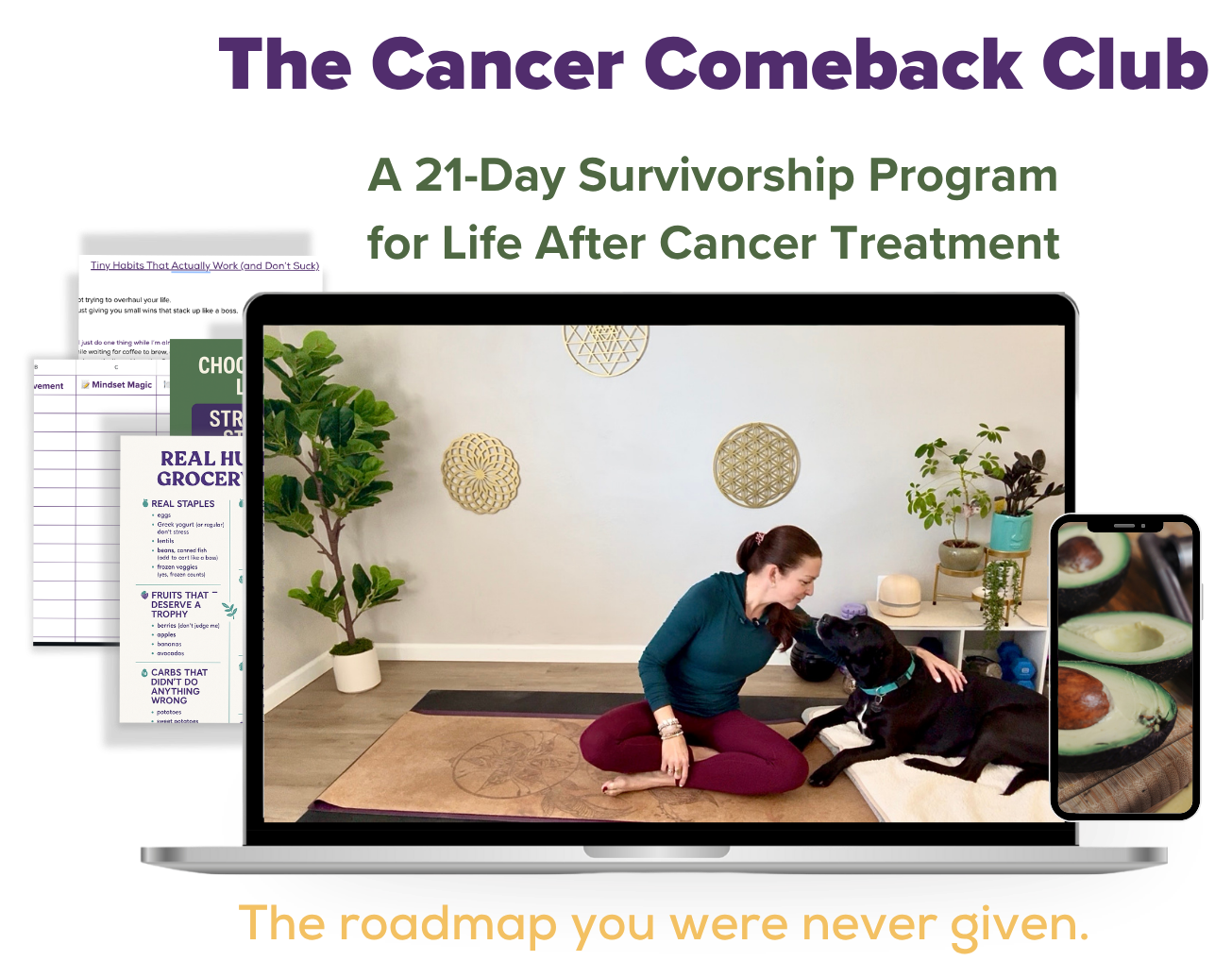
This is the entire premise behind the movement portion of The Cancer Comeback Club. Every day inside the program includes supportive movement, designed by an NASM Certified Personal Trainer specifically for the post-treatment cancer recovery body, paced for actual human beings in actual cancer recovery, and intended to rebuild the bridge between you and the body you live in.
Reflective Practice That Tells the Body It is Safe
The second piece of reconnection is reflective, and I am not talking about journaling in an elaborate, perfect notebook with a fancy pen and a candle situation. I am talking about structured prompts that gently nudge your brain to notice progress, name what is happening in your body, and lay down new neural pathways for safety, capability, and the version of yourself you are quietly becoming.
This matters more than it sounds. Research in trauma neuroscience shows that the simple act of noticing and naming what you are proud of activates the reward centers in the brain and starts to build new pathways for resilience. Survivors who do not engage in any reflective practice during the post-treatment phase tend to get stuck scanning for danger, scanning for symptoms, scanning for the next bad thing. Survivors who engage in even a small amount of structured reflection start to notice the slow, real change happening in their body and their life.
This is a rewiring after trauma and it works the same way physical therapy works for an injured joint, only it works for the nervous system.
Inside the program, every day includes one short reflection prompt, designed to be do-able even on the days you do not have the energy to fold laundry. The point is not the prompt, the point is, again, the consistency.
Food for Healing as a Form of Coming Home
The third piece of reconnection is nutritional, but not in the way the wellness industry has trained you to think about it.
After cancer, food is an emotionally loaded topic. Survivors are flooded with information about what they should and should not eat, often by people with no scientific training and a lot to sell. The result is that food, which should be one of the most grounding, body-reconnecting practices available to a survivor, often becomes a source of anxiety and shame.
I will never sell you a cleanse, I will never tell you a forbidden foods list and, I will absolutely never tell you that a single ingredient caused your cancer or will cure it. As a Plant-Based Nutritionist trained through eCornell's program based on the T. Colin Campbell research, the most evidence-based, body-respecting nutritional intervention for cancer survivors is gentle, consistent, plant-forward eating that supports cellular repair, hormone regulation, and immune resilience over time.
The reconnection part comes from the simple ritual of nourishing your body with real food, prepared with even a small amount of attention, which is one of the most underrated practices for reminding your nervous system that this body is yours, and it is safe to live inside again.
Inside The Cancer Comeback Club, every day of the program includes one (or more) supportive food/s for healing as one small, real, evidence-based act of nourishment paired with the movement and the reflection.
These three together, paced over twenty-one days, are what we call the Three Anchors of Survivorship. They are intentionally simple...AND they are also intentionally enough.
The Things Nobody Will Tell You About Reconnecting
There are a few things about coming back home to your post-cancer body that almost nobody will warn you about, and I would rather you hear them from a friend than be blindsided by them.
It is going to be slow. Slower than your pre-cancer self would have tolerated. There will be days when you do everything right and the body still does not feel like yours. There will be days when you do almost nothing and feel briefly, unexpectedly, like yourself again. Your job is not to chase the feeling, your job is to just keep showing up to the practice.
There will be grief. Reconnecting to a body that has been altered by cancer is not just a physical process, it is an emotional one. You will mourn the version of yourself that existed before diagnosis. That mourning is not a setback, it's part of the integration.
You will surprise yourself. There will be a morning, somewhere in the middle of the long quiet rebuild, when you stand up from a chair and notice that it did not hurt the way it used to, or you walk a little farther than you have in months without thinking about it, or you laugh at something 🐾Ernesto does with your whole belly in a way you had forgotten you could. Those moments are not random, they are the cumulative result of a thousand small acts of reconnection.
This is what cancer recovery actually looks like. The slow, real, unphotographable work of becoming somebody who lives inside their own body again, which has very little to do with the before-and-after photo the internet wants you to perform.
You Are Not Alone in This
If you are reading this from somewhere inside the post-cancer fog, looking down at a body that does not quite feel like yours yet, please hear this.
Of course you feel this way. You are inside the most under-supported chapter of cancer, in a body that has been through one of the most full-body experiences a human can survive, and the disorientation you are feeling is a normal and expected response to all of it. There is nothing wrong with you for not yet feeling at home in your own skin.
The Cancer Comeback Club was built specifically for this part. It is a 21-day survivorship re-entry program, structured around gentle movement, reflection, and food for healing, paced for real people in real cancer recovery, and designed to slowly, patiently rebuild the bridge between you and the body you are still inside of. You can do it from your bed if you need to. You can repeat days. You can skip days you are not ready for. You can move slowly. The program was built by me, a fellow survivor, for survivors, and it is exactly the structured re-entry I wish someone had handed me the day my own treatment ended.
🐾Ernesto, my 88-pound rescue dog and unofficial healing assistant, makes regular appearances throughout the program. He has been a quiet, persistent reminder that the comeback is easier when somebody is sitting beside you. Even on the days when that somebody is mostly napping with their head on your foot.
Coming Home to Yourself, One Small Practice at a Time
You will not wake up one morning suddenly feeling at home in your post-cancer body. That is not how the nervous system works. What will happen, if you keep showing up to the small daily practices, is that the body will slowly, almost imperceptibly, start to feel a little less borrowed, a little more yours.
That is the work. That is the comeback.
You begin with supportive movement, some honest reflection, and small acts of nourishment. You begin with the understanding that the body you are inside of is not your enemy, even if it has felt like one. It is the same body that carried you through cancer, and it is the only body that will carry you forward into the rest of your life.
It is worth coming home to.
Come find your comeback with us. The roadmap exists now.
💜 Sara
Sara Broome is a colon cancer survivor, NASM Certified Personal Trainer, Corrective Exercise Specialist, and Weight Loss Specialist, Plant-Based Nutritionist (trained through eCornell's T. Colin Campbell Center), Cancer Wellness Coach, and the founder of The Cancer Comeback Club, a 21-day survivorship re-entry program for life after cancer treatment. She lives somewhere quiet with the love of her life and a rescue dog named 🐾Ernesto.
Learn more about the Cancer Comeback Club, a 21 day survivorship re-entry program, by clicking below!
Love The Cancer Comeback Conversations?
💌 Join The Sara & 🐾 Ernesto Drop-In
Real-life updates on movement, food for healing, and survivorship after cancer… shared when energy allows, because healing doesn’t follow a schedule.
👉 Subscribe to The Sara & 🐾 Ernesto Drop-In
We hate SPAM. We will never sell your information, for any reason.